
Regulation before Revelation

The body doesn’t care about meaning, it cares about right relationship.
There is a quiet mistake we make when we speak about the sacred. We assume it must arrive carrying meaning.
But some moments don’t arrive with meaning at all. They arrive with sensation. With pressure. With fear. With time.
This morning, I found myself dealing with severe constipation. A hard stool impacted at the rectum. Real pain. The kind of pain that narrows attention and makes the body panic. The kind where the instinct to force things only increases the risk of tearing.
There was nothing symbolic about it. Nothing elevated. Just the body, refusing to be rushed.
I spent a long stretch of time confined in a small bathroom. A very small space. The door closed. The bath running. The floor cold under my feet. There was nowhere else to go and nothing else to do except tend to my body and breathe through the pain.
No insight was available. No story could help. No interpretation softened anything.
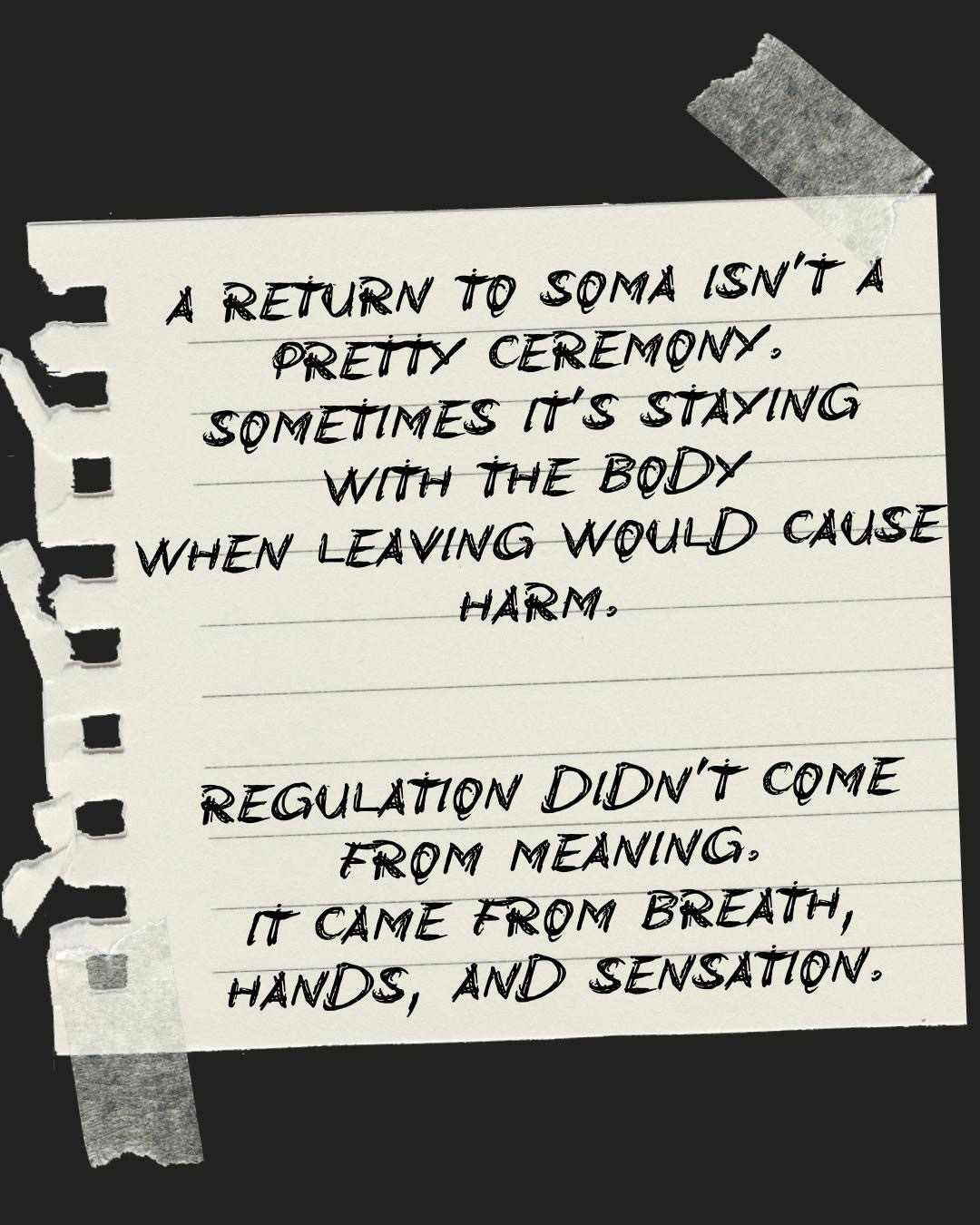
It became clear very quickly that a return to soma isn’t always a pretty ceremony.
Sometimes the ceremony is being stuck with the body, breathing through fear and discomfort, and not abandoning it when it’s unglamorous.
Staying minute by minute, because leaving is dissociating, forcing, overriding and that would cause harm.
So I stayed.
I used warmth. Time. Breath. I breathed into my belly and exhaled through my mouth.
I noticed how tightly my jaw was holding, how the pelvic floor mirrored it exactly.
When one softened, the other followed.
Not through effort, but through patience.
The anus is not a poetic organ.
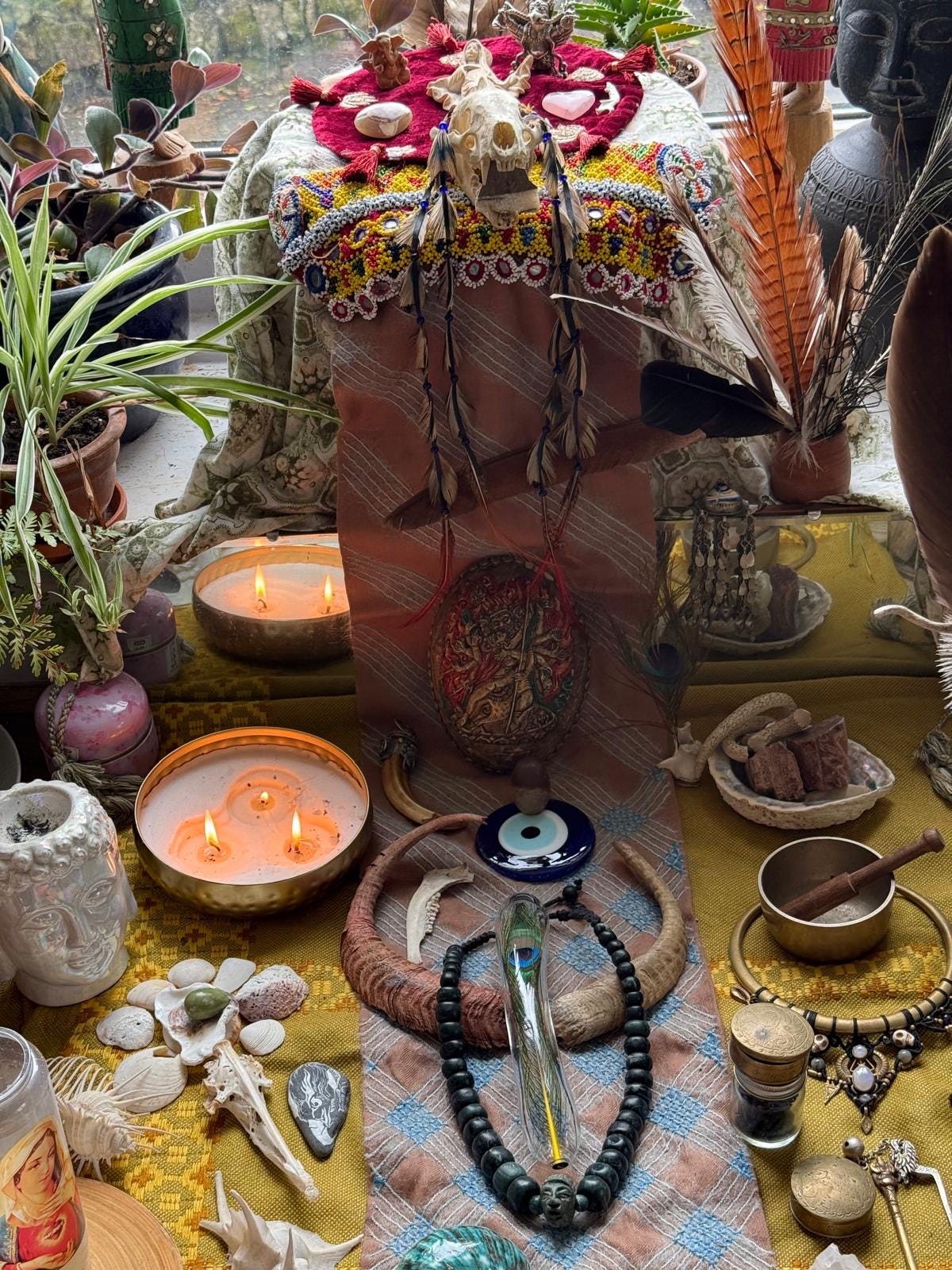
It does not want symbolism.
It wants timing, warmth, support, restraint.
It does not respond well to force.
It responds to safety.
Eventually, slowly, the body completed what it needed to complete.
When it was over, what surprised me most was not relief. It was what came after.
A heavy, bruised tenderness. Not sharp pain. Not alarm. More like the ache that follows exertion once the system has finally relaxed enough to feel what it has been holding back.
The body was no longer bracing. It was asking for care.
So again, I stayed.
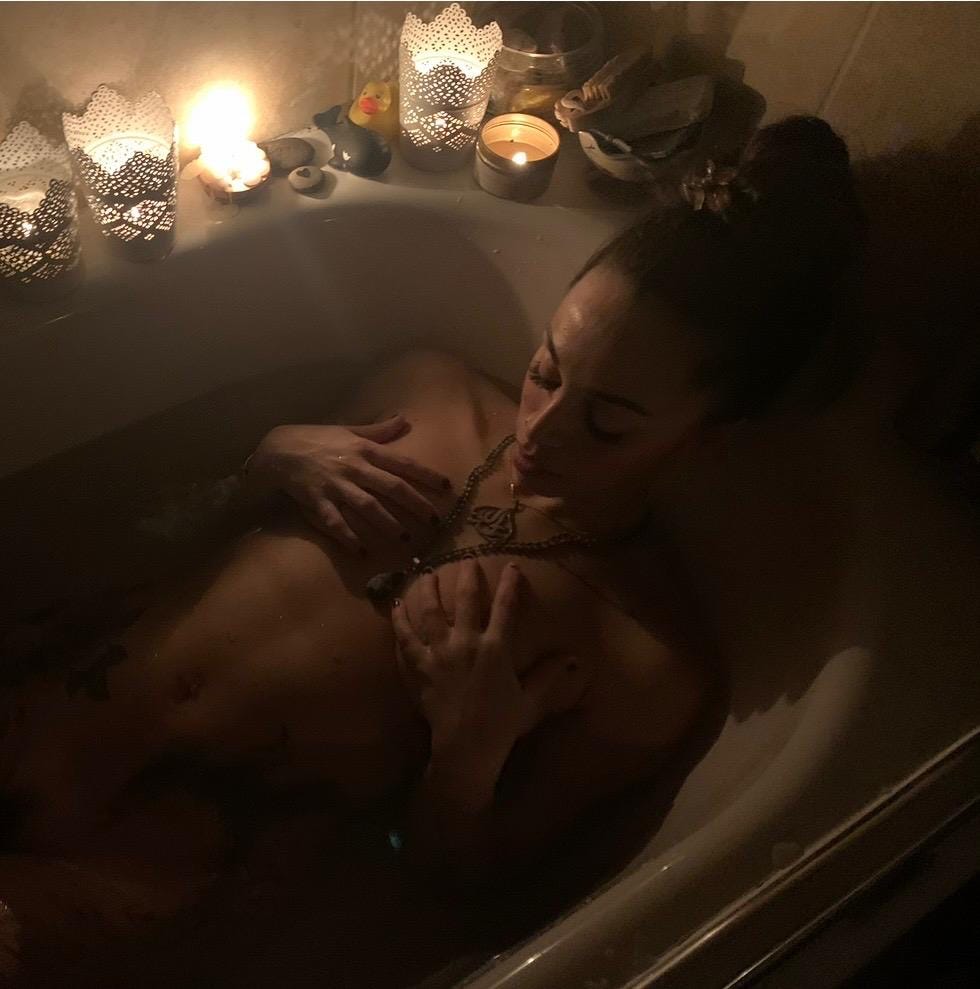
I returned to the bath.
I lay back in the heat.
I breathed into my belly and let the exhale soften my jaw, my throat, my pelvic floor.
I could feel how the whole system wanted to slow down - how the urgency had passed, but the residue remained.
This is the part we often skip.
We let what needs to pass, pass! But we don’t always stay to tend what remains.
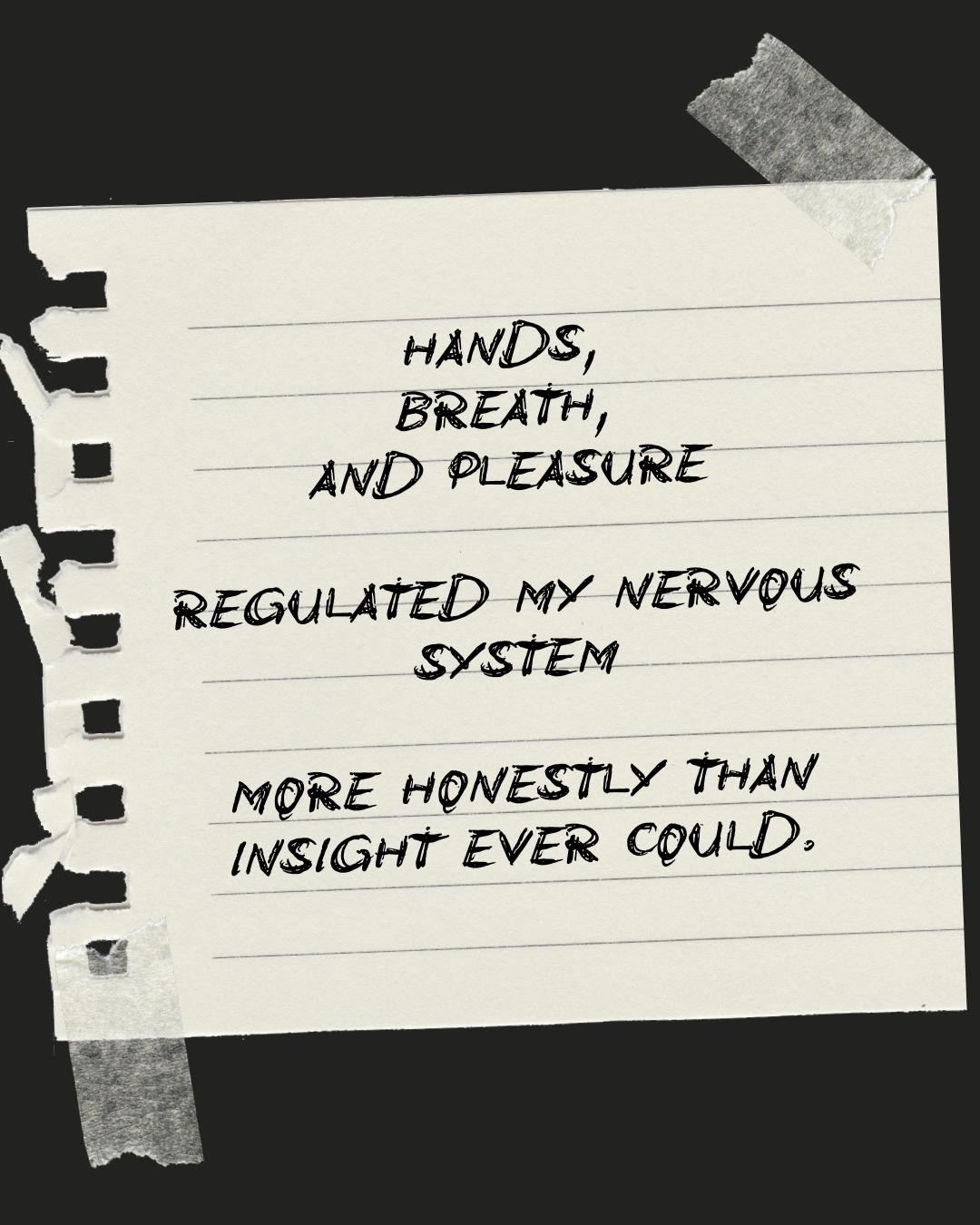
I noticed that simple, hands-on care brought my nervous system into a deeper calm than any insight could have.
Not dissociation.
Not relief-through-escape.
But completion.
The kind that settles the body from the inside, rather than lifting it out of itself.
From there, I chose a form of self-pleasure as a mind–body practice.
Not to perform.
Not to distract.
Not to bypass…But to anchor regulation. Pleasure, here, was not about fantasy or discharge.
It was about reassurance. Circulation. Allowing the nervous system to remember that it has a primary language it can return to when experiences leave residue rather than resolution.
What I paid attention to most closely was not the pleasure itself, but the moment judgment appeared, the familiar impulse to narrate, explain, elevate, or correct the experience. Each time it arose, I noticed it, and returned to sensation instead.
Again and again.
The effect was unmistakable. The body rounded. The nervous system settled. The bruised tenderness softened into something held rather than avoided.
This wasn’t about sex. It wasn’t about transcendence. It wasn’t about meaning.
It was about governance.
Because so often we are taught to meet intensity through false acceptance, premature insight, or spiritual override. We “understand” experiences before the body has finished digesting them.
We call that wisdom, when it is often avoidance.
There is a tendency in spiritual culture to either bypass the body or over-symbolise it - to turn physiology into myth, or discomfort into doctrine.
But some moments are not asking to be spiritualised. They are asking to be related to properly.
Right relationship is not glamorous. It is precise.
It shows up in how we meet discomfort without spectacle. How we stay close to the mundane without contempt. How we allow the nervous system to complete its cycles, instead of escaping upward into interpretation.
There is an eros here, but not a sexual one.
An eros of relationship.
An intelligence that knows when to hold, when to soften, when to slow down instead of reaching for meaning.
This feels increasingly like the axis of my life and work.
Not the pursuit of meaning, but the cultivation of right relationship.
With the body. With sensation. With truth as it actually appears.
No altar required. No insight necessary.
Just presence. Just restraint. Just care.
This, too, is devotion.